
How removing a 30-year-old racial quota can still have lingering effects today
By Lynelle Tham
Sijil Pelajaran Malaysia (SPM) results day will perhaps be the most anticipated one for those who sat the exam about 3 months ago. These results will determine the course of their life and even their ambitions, but some of those dreams might not come true in the long haul. For years, ethnics minorities have disputed that there exists racial bias in public universities admissions.
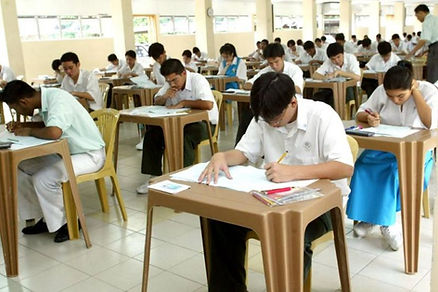
Racial quotas did initially exist in public universities.
It was first introduced as part of the New Economic Policy (NEP) that the government formulated after the May 13 racial riots. They allocated a 55:45 ratio for bumiputera and non-bumiputeras across all programmes in public universities. Over the years, the number of Chinese and Indian students decreased while the number of Malay students increased, as seen at Universiti Malaya.

Since 2002, the quotas for races have been removed but ethnic minorities still argue that their acceptance rate remain low. During the 2013-2014 academic year, 19 per cent of places in government funded universities were awarded to Chinese and 4 per cent to Indians.
‘Take It Or Leave It’
More often not, non-bumiputeras do get public university placements but it is at the cost of being less likely to be offered the course of their choice. This is despite having taken the public pre-university programme pathway such as Matriculation or Sijil Pelajaran Tinggi Malaysia (STPM).

Source: Malay Mail
Phang Lok Ying who took Matriculation for her pre-university studies shared that she was not given the course she wanted even though she completed the programme with a CGPA of 3.75 and a Band 4 in the Malaysian University English Test (MUET).
“Science in education was what I wanted to study, but I was offered a Food Science programme at Universiti Putra Malaysia even though I applied a couple of public universities through UPU (Unit Pusat Universiti) online,” she said, claiming that it is already difficult when the system grants only one university placement.
A former STPM student who declined to be named was also in the same situation as Phang. Currently taking up his fifth choice, which is bio-medicine at Universiti Malaya, he pointed out that there are only around 10 Chinese students in his whole course that consists of 60 people: “The rest of them are Malay, with about 5 who are Indian. So go figure.”
‘Sowing The Seeds of Racism and Discouragement’

Whether they still continue to exist or not, race-based policies in education seem to be another recipe for the resurgence of racism. In July 2021, a tweet justifying the racial quotas went viral. The user was replying in response to a Malaysian Indian student’s story about being unsuccessful in securing a placement in the UPU despite scoring straight As in SPM. The tweet has now since been removed, but remarks just like that are not just one-of-a-kind on social media.
Some are even more prevalent when the discussion overlaps with Bumiputera-only admissions into Universiti Teknologi MARA (UiTM).

As brain drain continues to grow in Malaysia, Chong Sin Woon with the Malaysian Chinese Association told BBC in 2013 that the country needs to streamline pre-university exams for all races to create true meritocracy because otherwise they will leave.
“The system should nurture talent. Instead, we are creating generations of people who think that this country is unfair,” he said.

